Our approach
We took a hypothesis-led, experimental approach, prioritising learning in a fast-moving space.
Understanding the ecosystem
We looked for opportunities across the contract lifecycle for a typical large commercial company with an extensive supplier network - from strategy and procurement through to delivery - to identify where decisions are being made that could influence the level of climate ambition that is written into a contract.
We also explored a wide range of user needs, including:
- Lawyers drafting and reviewing contracts
- Procurement teams shaping supplier requirements
- Sustainability leads setting organisational ambition
- Senior decision-makers influencing strategy
This revealed a key gap: many of the people influencing contracts don’t directly engage with legal content.
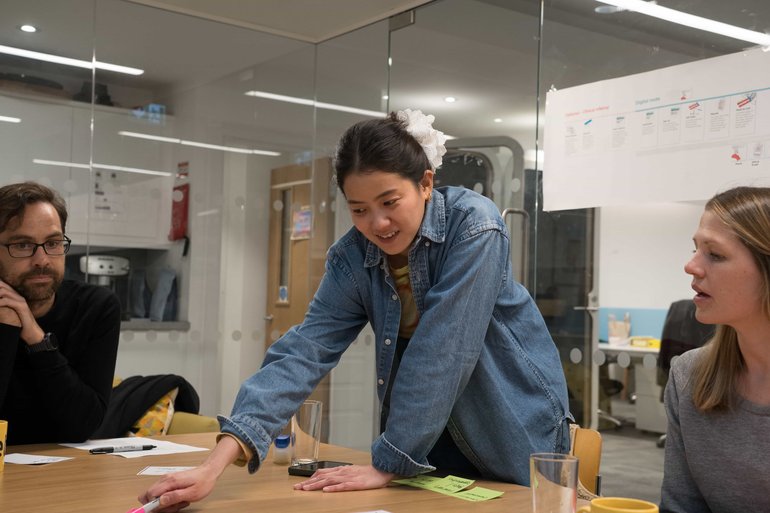
Rapid experimentation
Rather than relying on long discovery phases, we focused on learning through action:
- Frequent conversations with stakeholders
- Low-fidelity sketches and prototypes
- Continuous testing and iteration
This approach allowed the team to quickly check assumptions and understanding through practical immersion.
This helped the team adapt quickly as both user needs and the technology landscape evolved.
Prototyping new interactions
We developed three public ‘provocotypes, published on TCLP Labs:
- Align contracts with SBTi standards
- Benchmark contracts against GRI standards
- Compare tender documents against climate ambition
These tools explored how users could:
- Compare their own documents against trusted standards
- Translate legal content into actionable insights
- Take steps to improve contracts and processes
This work directly informed the development of TCLP Labs as a platform.
As described in a LinkedIn launch post:
“TCLP Labs… is designed to help legal, procurement, and sustainability teams turn climate ambition into action through contracts.”