The benefits of volunteering: why giving your time is good for you and your workplace
Vicky | Feb 2026
More of us volunteer than you might think. According to Gov.UK, during 2023–2024 approximately 7.5 million people in England took part in formal volunteering at least once a month. Around 12 million people reported volunteering formally at least once in the previous year.
These figures highlight just how important volunteering in the UK has become, not only for communities, but for individual wellbeing and workplace culture too.
During our lifetimes, most of us will rely on or benefit from an organisation that is supported by, or entirely run by, volunteers. Healthcare, community development, housing, food insecurity, youth services and domestic violence support are just a few of the areas where volunteers make a difference.
When we get into trouble in the waters around our island, we rely on the RNLI, an organisation powered by volunteers. It’s humbling how many people give their time, skills and care to help others, and how many essential services depend on that generosity and motivation.
Whether this should be the case is a thought for another post. But what is clear is that there are strong links between volunteering and improved wellbeing for those who give their time.
Volunteering is a prosocial behaviour
Helping others is what psychologists describe as prosocial behaviour. Prosocial behaviour refers to actions intended to benefit others rather than oneself, motivated by genuine care rather than personal gain.
It encompasses a broad range of concepts including:
Volunteering
Citizenship behaviours
Civility and kindness
Co-operation
Social activism
These types of behaviours are central to how communities have thrived and survived throughout history.
In the workplace, prosocial organisational behaviours can include:
Volunteering to mentor a colleague
Sharing knowledge and expertise
Supporting a team member who feels overwhelmed
Even something as simple as offering to make a cup of tea
These small but meaningful actions enhance workplace culture, strengthen social connections, and improve employee engagement and productivity.
Why volunteering is good for your mental and physical wellbeing
Although volunteering is not motivated by self-gain, research consistently shows the wellbeing benefits of volunteering.
Volunteering has been linked to:
Reduced stress levels
Lower risk of depression
Reduced risk of heart disease and stroke
Increased feelings of purpose and fulfilment
Helping others stimulates the production of dopamine, boosting positive emotions that can be contagious within teams and communities.
Giving time to causes that feel purposeful builds confidence, broadens perspectives, develops new skills and creates meaningful social connections. All of these contribute to improved overall mental health and wellbeing.
The benefits of volunteering in the workplace
Encouraging prosocial behaviours at work has significant benefits for organisations too.
A workplace culture that supports volunteering and kindness:
Builds co-operation and trust
Encourages emotional support and knowledge sharing
Strengthens employee engagement
Enhances corporate social responsibility (CSR) initiatives
Many larger organisations offer employee volunteering programmes as part of their CSR commitments. We’ve all seen examples of corporate volunteering , from repainting school walls to improving playgrounds.
But smaller organisations can also embrace the social value agenda by considering how they contribute to both their internal culture and the wider community in which they operate.
At Unboxed, we encourage informal peer-to-peer mentoring. Several of our team members volunteer as mentors for the BeMe Digital mentoring programme, supporting young women and girls from Black and minority backgrounds into STEM careers. Our innovation days also create space for people to explore interests, build skills and contribute in meaningful ways. While other members of the team have volunteered for years in local community youth organisations, sports clubs and repair cafes.
What motivates people to volunteer?
People often choose to volunteer for causes that have directly affected them, their loved ones or their colleagues.
Laura, one of our designers, has volunteered for a number of organisations over the years. Following her pregnancies, she began volunteering with the Pelvic Partnership, a national charity supporting women with pregnancy-related pelvic girdle pain (PGP).
“I wanted to help because I didn’t want other women to feel like I was feeling. I get so much out of that, knowing I’m helping others. It’s a strong bond of women who’ve been through this same experience. When volunteering is done well it should be supportive and you can see the impact that you're having.”
For Laura, the skills developed through volunteering are highly transferable to the workplace.
“Volunteering helped me to develop my skill set. It expanded my social understanding and raised my awareness of other people's lives. It developed my compassion and empathy. And it built my own confidence to go into different situations.
There is a level of humility involved. You can be very senior in your job but you can be put out of your comfort zone when you're dropped into a different situation. You think about your skill set in a different way — how to communicate with people in different ways.
As a user researcher, getting insights into other people's lives gives me more empathy and learning around how to approach different situations.”
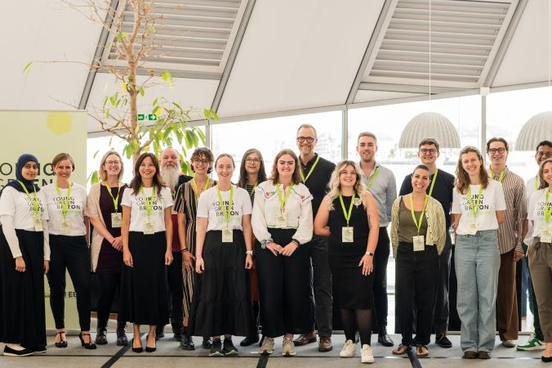
Tom, another of our designers, is in his second year of volunteering for the Young Green Briton Challenge, which supports students aged 11–16 to develop skills in design, innovation, business and sustainability.
“What I like about volunteering for this organisation is that it calls for the skills that I have — design education, climate awareness and working in the education space. It fits well with my interests and motivation. It can be energising, giving you a new perspective on the things you’re working on yourself.
You meet new people and build professional relationships outside of work but within a shared area of interest.”
Through working with young people, Tom has gained valuable insights that directly support his professional role:
“I gained added sensitivity and awareness around how to effectively work with different age groups.”
Finding the right balance
Volunteering can push us out of our comfort zones, help us learn new skills and expand our social networks. These are all powerful personal and professional development opportunities.
However, there must be a realistic balance between expectation and capacity. Particularly in the workplace.
Organisations that expect employees to go above and beyond when workloads are already high, risk alienating their people. But when businesses intentionally build a culture where helping others is encouraged and where there is genuine support and capacity to do so, the benefits are substantial.
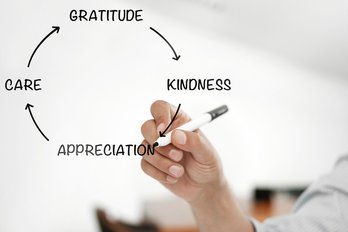
Creating a workplace culture of volunteering and kindness doesn’t always require large programmes. Often, the smallest gestures can have the greatest impact.
And in both our communities and our workplaces, those small acts of kindness go a very long way.